
What Does a Viking Have to Do With Soft Skills?


More Videos

How Storytelling Moves AI Strategy Forward

MICROSOFT REACTOR Startup AI School: The glitz, glamour, and the dowdy of an AI Startup #6
KALEIDOSCOPE: Talk with Entrepreneur Shoba Purushothaman
What Does a Viking Have to Do With Soft Skills?

Over the past few weeks, we've all seen countless videos explaining why Erling Haaland is one of the world's greatest footballers.
Some point to his speed. Others his strength. Many even credit his Viking genetics. They're all missing the point.
The most important thing about Haaland isn't how he scores goals. It's how he trains.
Imagine taking a group of young footballers to watch Erling Haaland train. You explain his movement, show videos of his finishing and break down every run, every touch and every finish. They spend an hour learning how he scores goals.
Would they leave as better footballers? Of course not. They'd leave knowing more. They wouldn't leave performing better.
Understanding a skill isn't the same as building one.
Performance isn't built through information. It's built through intentional training and practice. The same action or skill movement is trained, observed, refined and practised until it becomes instinctive.
Neuroscience has been proving exactly the same thing for decades. The brain doesn't permanently change because we understand something once. It changes through deliberate practice.
Every practice session strengthens the neural pathways behind a behaviour until it becomes embedded in long-term memory. Eventually, performance no longer depends on remembering. It depends on intrinsic instinct.
That's why Haaland doesn't stop to think about technique when he's one-on-one with a goalkeeper. Years of practice have already done the thinking for him. He simply performs.
Which raises an uncomfortable question.
Why do organisations still believe information changes behaviour?
Take a young engineer. You can explain how to think more critically, and communicate, influence and collaborate better across teams.
After an hour, they'll probably understand the concepts.
But they won't leave able to do any of it consistently. Human skills aren't built through information. They're built through intentional training and practice until those behaviours become embedded in long-term memory. Until they become instinctive.
Yet many organisations are still investing as though information were the answer. More content. More courses. More briefings & townhalls.
AI has changed the equation. Today, every employee can ask ChatGPT how to negotiate, influence stakeholders, communicate more effectively or manage conflict. The answer arrives in seconds.
Information is no longer the competitive advantage. Behaviour is.
The organisations that win won't be the ones with the biggest learning libraries. They'll be the ones that build judgement, communication, collaboration and leadership intentionally. Information can be generated in seconds. Behaviour has to be built.
If this has challenged the way you think about learning, I invite you to explore the cognitive science behind HARDSKILLS: https://www.hardskills.com/why-hardskills/learning-science
You might also like
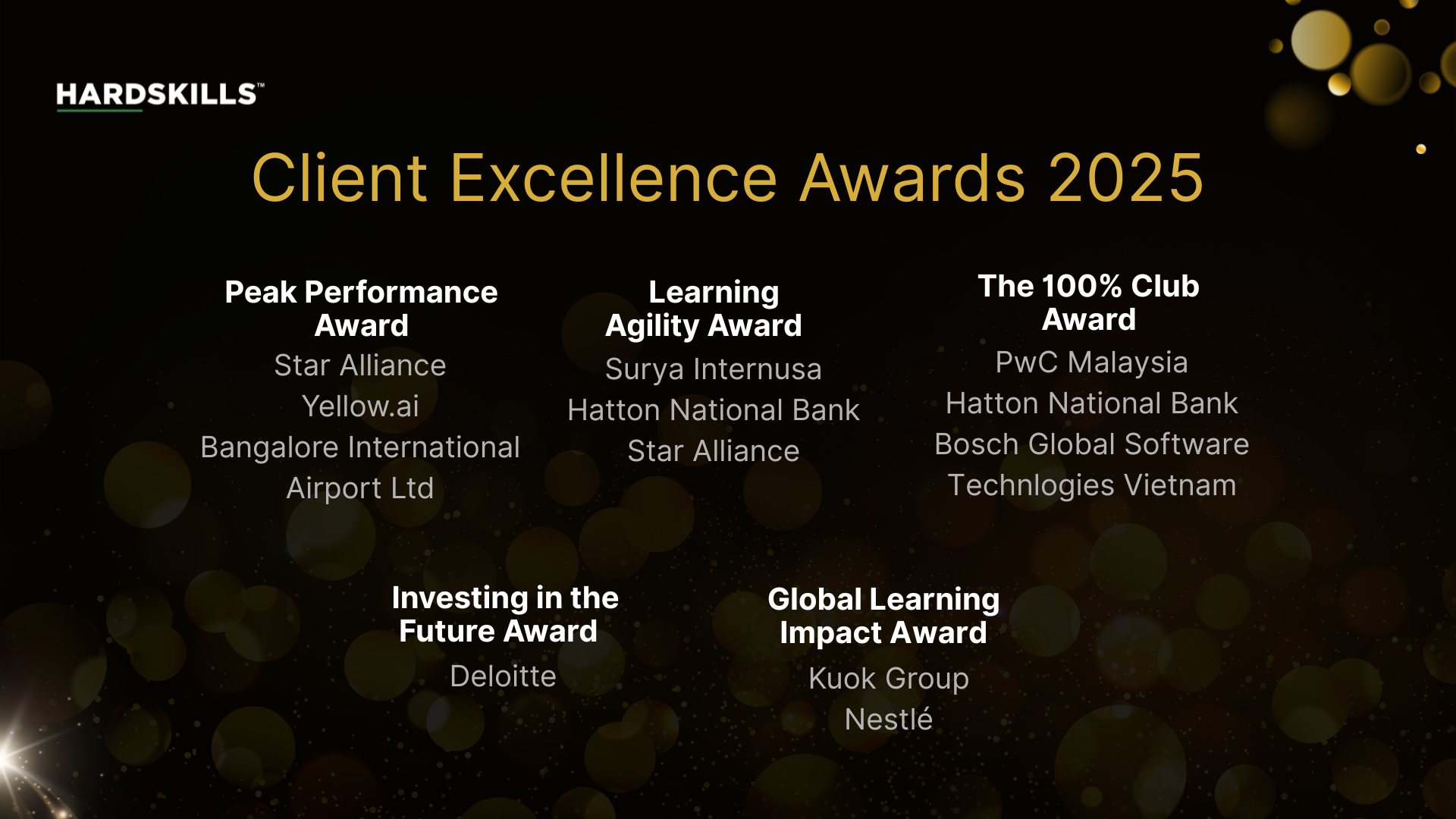
What Excellence in Human Skills Looks Like
.png)
Why most corporate soft skills training fails – and how to fix it.

Does Size Matter in People Transformation
What Does a Viking Have to Do With Soft Skills?
Over the past few weeks, we've all seen countless videos explaining why Erling Haaland is one of the world's greatest footballers.
Some point to his speed. Others his strength. Many even credit his Viking genetics. They're all missing the point.
The most important thing about Haaland isn't how he scores goals. It's how he trains.
Imagine taking a group of young footballers to watch Erling Haaland train. You explain his movement, show videos of his finishing and break down every run, every touch and every finish. They spend an hour learning how he scores goals.
Would they leave as better footballers? Of course not. They'd leave knowing more. They wouldn't leave performing better.
Understanding a skill isn't the same as building one.
Performance isn't built through information. It's built through intentional training and practice. The same action or skill movement is trained, observed, refined and practised until it becomes instinctive.
Neuroscience has been proving exactly the same thing for decades. The brain doesn't permanently change because we understand something once. It changes through deliberate practice.
Every practice session strengthens the neural pathways behind a behaviour until it becomes embedded in long-term memory. Eventually, performance no longer depends on remembering. It depends on intrinsic instinct.
That's why Haaland doesn't stop to think about technique when he's one-on-one with a goalkeeper. Years of practice have already done the thinking for him. He simply performs.
Which raises an uncomfortable question.
Why do organisations still believe information changes behaviour?
Take a young engineer. You can explain how to think more critically, and communicate, influence and collaborate better across teams.
After an hour, they'll probably understand the concepts.
But they won't leave able to do any of it consistently. Human skills aren't built through information. They're built through intentional training and practice until those behaviours become embedded in long-term memory. Until they become instinctive.
Yet many organisations are still investing as though information were the answer. More content. More courses. More briefings & townhalls.
AI has changed the equation. Today, every employee can ask ChatGPT how to negotiate, influence stakeholders, communicate more effectively or manage conflict. The answer arrives in seconds.
Information is no longer the competitive advantage. Behaviour is.
The organisations that win won't be the ones with the biggest learning libraries. They'll be the ones that build judgement, communication, collaboration and leadership intentionally. Information can be generated in seconds. Behaviour has to be built.
If this has challenged the way you think about learning, I invite you to explore the cognitive science behind HARDSKILLS: https://www.hardskills.com/why-hardskills/learning-science